TABLE OF CONTENTS


GENERAL INFORMATION


Disclaimer: The statements and opinions contained in the articles of the American College of Osteopathic Pediatricians’ (ACOP) eJournal are solely those of the individual authors and contributors and not necessarily those of the ACOP. The appearance of advertisements in the ACOP eJournal is not a warranty, endorsement or approval of the products or services advertised or their effectiveness, quality or safety. The ACOP disclaims responsibility for any injury and/or damage to persons or property as a matter of products liability, negligence, or otherwise, or from any use of operation or any methods, products, instructions, or ideas contained in the material herein. Discussions, views, and recommendations as to medical procedures, choice of drugs, and drug dosages are the responsibility of the authors.

Marshall's Corner Information

Eleven cases have been provided to the left for you to diagnose. Give it a try and see how well you do. Click on the answer link to see if you are correct.


Question 1 Answer:

NEC

Question 2 Answer:

Gastroschisis

Question 3 Answer:

Gastroschisis

Question 4 Answer:

Winberger's Sign
(Congenital Syphilis)

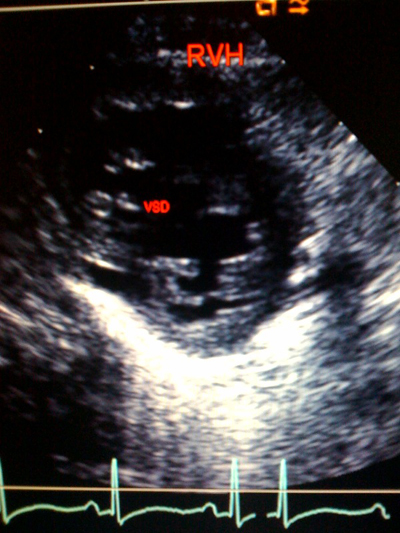
Question 7 Answer:

Ventriculoseptal Defect (VSD)

question7answerimage

Question 5 Answer:

Left Congenital Diaphragmatic Hernia

Question 6 Answer:

Atrioseptal Defect (ASD)

question6answerimage

Question 8 Answer:

Transposition of Great Arteries (TGA)

question8answer1
question8answer2

Question 9

Patent Ductus Arteriosus (PDA)

question9answerimage

Question 10 Answer:

Tetralogy of Fallot (TOF)

question10answerimage1

question10answerimage


Marshall's Corner

See if you can correctly diagnose these cases! Challenge yourself!

By James R. Marshall, DO

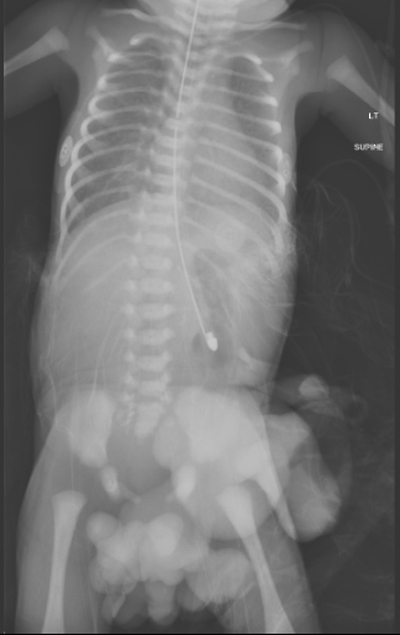
  1. 30 wks gest. female. Bile gastric residuals, bloody stools, hypoactive
    bowel sounds.
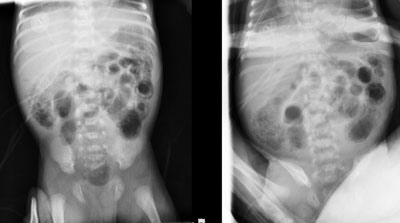
  2. Question 1

    Diagnosis?                CLICK HERE to see if you are correct.

    top

  3. Fetal sonogram.

  4. Question 2

    Diagnosis?                CLICK HERE to see if you are correct.

    top

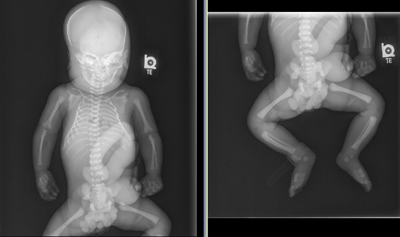
  5. Live born neonate.

  6. Question 3a

    Diagnosis?                CLICK HERE to see if you are correct.

    top

  7. Erotion if Netaphysis of proximal tibia.
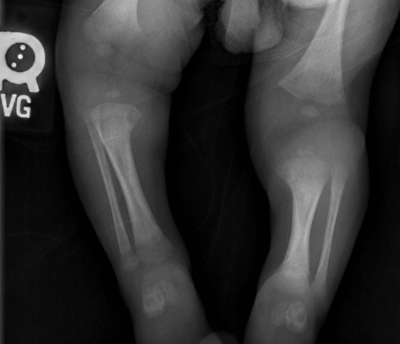
Question 4

    Diagnosis?                CLICK HERE to see if you are correct.

    top

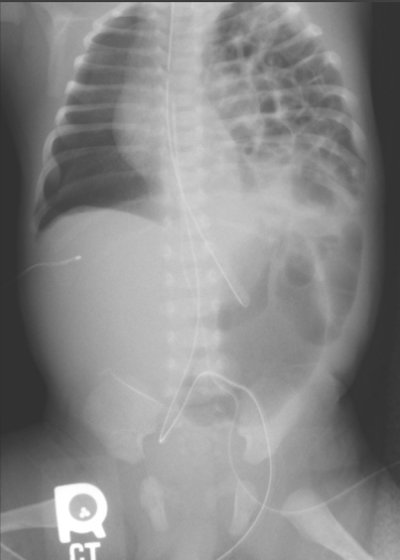
  1. Scaphoid abdomen.

    Image 5b

Diagnosis?                CLICK HERE to see if you are correct.

top

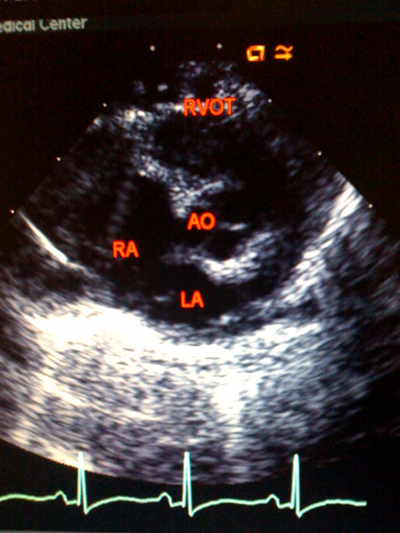
  1. Gr 1-2/6 murmur LSB and RSB. BP's nl. in all 4 extremities.
    O2 by nasal cannula at 1L/min. and Fi02 0.30D.
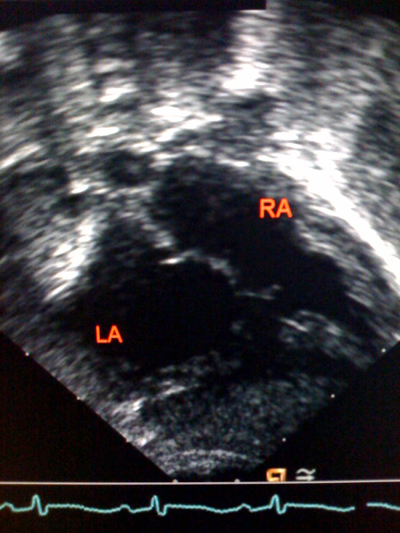

    Question 6

Diagnosis?                    CLICK HERE to see if you are correct.

top

  1. Gr 2/6 harsh murmur LSB 02 by nasal cannula at 2L/min. and Fi02 0.30
    no metabolic acidosis-term male.
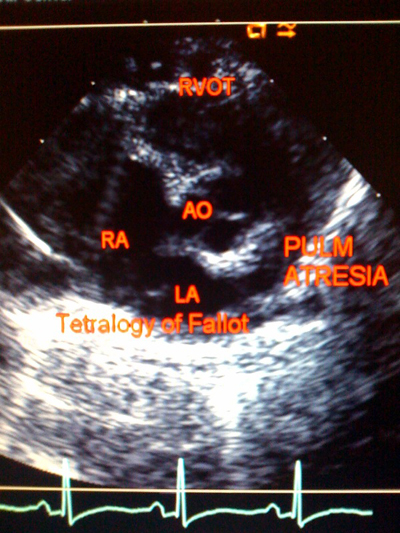
Question 7a

Diagnosis?                CLICK HERE to see if you are correct.

top

  1. Gr. 2-3/6 murmur cyanotic, at 1 hr of age, P02 on R.A.25mmHg. P02 on
    100% O2 -38, metabolic acidosis. PGE given. Place on ventilator. Sedated.
    UAC&UVC Inserted. Transferred to pediatric cardiovascular surgery.
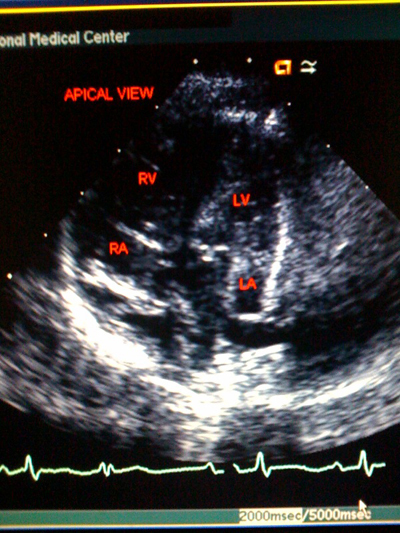

    Question 8a

    Diagnosis?                CLICK HERE to see if you are correct.

    top

  2. 28 wks gest. male. Gr. 3/6 too-and-fro murmur LSB. Placed on ventilator.
    Surfactant given for HMD (RDS I).
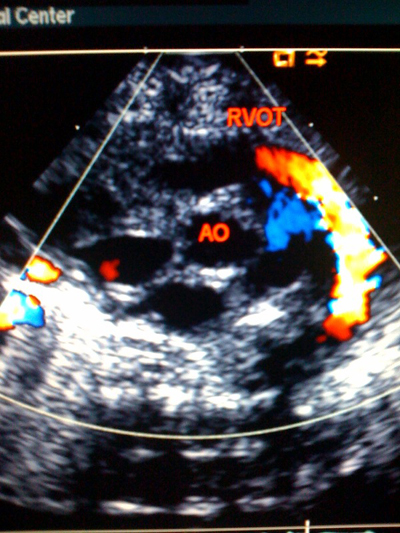
    Question 9

    Diagnosis?                CLICK HERE to see if you are correct.

    top
  1. Gr 2/6 murmur LSB & RSB. Cyanotic in well baby nursery at age 2 hrs.
    Transferred to NICU O2 sat 56% on R.A. ABG's on 100% O2 showed P02
    of 74, PGE started. UAC & UVC placed. Transferred to cardiovascular
    surgery. Intubated and placed on ventilator.   
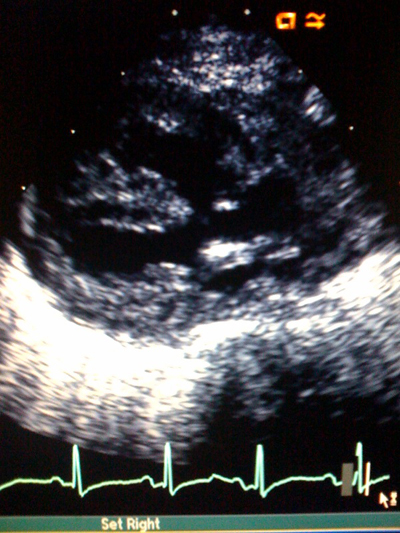
             

    Question 10f

    Image 10b

    Question 3c

    Diagnosis?                CLICK HERE to see if you are correct.

    top

  2. T33 wks gest. male maternal chorioamnionitis, disorganized suck
    swallow breath pattern, spasticity of lower extremities 3mo. later.
    Cognitive dysfunction noted in 5th Grade.
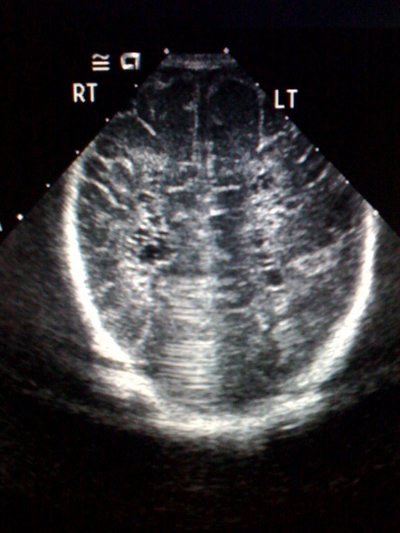
    question 11
    Diagnosis?                CLICK HERE to see if you are correct.

Question 11 Answer:

(Cystic) Perventricular Leukomalacia (PVL)

question11answerimage

question11answerimage