
THE QUARTERLY PUBLICATION OF THE AMERICAN COLLEGE OF OSTEOPATHIC PEDIATRICIANS
SPECIAL STUDENT LED & FOCUSED ISSUE
Fall-Winter 2019 Issue
 to Home Page
 |
STUDENT PERSPECTIVES
Just a Student
By Roy Thomas, OMS-III
Burrell College of Osteopathic Medicine
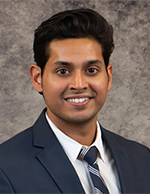 |
| Roy Thomas |
Sometimes we get stuck in a mindset that we’re just students. I certainly have said I’m “just a student” when introducing myself or, at times, just to be polite. These three little words help us to stay humble and remember our role in any rotation site we’re at. However, we forget that even though we’re just students, we still have the ability to help. We may not be saving lives just yet, but we can help just by listening, just by encouraging, and most importantly just by showing compassion to our patients. During my psychiatry rotation, I had a pediatric patient that I was following up with every day for my attending. He had been told negative things all his life by his mom, resulting in depression and suicidal thoughts. Every day, I would follow up to see if any progress had been made and every day, I would find one thing to encourage him on. I would try my best to help him see that he has a lot of good to do in this world and that he has many reasons to live. I wasn’t sure about the impact I was actually making in his life. I could see he liked hearing my words of encouragement, but I wasn’t sure whether he believed what I was saying. As time went on, I could see a change in his demeanor and attitude as I continued to listen and encourage him.
Since we are “just students”, sometimes we get the opportunity to spend more time with patients than the busy physicians we work for. During my pediatric rotation, I started a visit for my attending with a patient whose mom was an anti-vaxxer. Of course, most of us in the medical field are pro-vaccines and understand the necessity for them. However, our role as students is not to argue for science and vehemently advocate the importance of administering vaccines to any and every parent. Our role is to listen to parents and show compassion even when we don’t agree with them. As I got the chance to spend more time listening to the patient’s mom, I could sense an appreciation from the mom for the nonjudgmental manner in which I listened to her and gathered my notes for my attending.
I’m sure many of us within ACOP have had similar patient experiences. Helping patients and families like these are the reason that we wanted to become a medical student in the first place. But we are more than “just a student.” We are student doctors in training that can make a difference in our patients’ lives, not only through our compassionate and encouraging words, but through our willingness to listen. As we continue to be the best we can be during every rotation, we are making impacts in our patients’ lives, whether we realize it or not.
____________________________
The Power of Our Words
By Victoria-Lynn Ramos, OMS-III
Burrell College of Osteopathic Medicine
 |
| Victoria-Lynn Ramos |
As a third-year medical student, I have had the privilege to meet and interact with many different patients during my clinical rotations. However, one interaction that I could never forget actually occurred during my second year of medical school while volunteering with my ACOP student chapter at a Mini Medical School event. Mini Med School is a monthly outreach event where our organization visits local elementary schools to set up stations for students in their after-school programs to learn about the body and promote health education. One of our stations was geared towards raising awareness and promoting the discussion of mental health and anti-bullying amongst children of this age. First, we would ask the children to describe what bullying is and how they felt when unkind words were directed towards them. Then they would write down those mean words or phrases on a piece of paper, share it with the group, and then rip it up to throw away in the trash, in order to illustrate that “words like that belong in the trash.” We would then end the activity by writing down kind comments and compliments on post-it notes and stick them on the kids to wear for the rest of the event.
One young girl in particular, Sarah, was quite shy and hesitant at first to write down a mean comment that one of her classmates had once told her. Eventually, she wrote down the three words that were deeply saddening her, “You are dumb.” Despite ripping up her paper, she was still affected by the comment. While the rest of her group giggled with post-it notes stuck on their shirts, arms, and foreheads, I decided to write her a note saying that she was smart and kind. She read the note that I placed on the back of her hand, and with the slightest tears in her eyes, Sarah thanked me with a hug.
Although this was a simple gesture, within this moment, I felt that it was quite possible that I had made a difference in her life. One note and compliment were enough to highlight how special she was and to remind her of all her capabilities. I soon realized the kind of influence I could have on others, to build up their self-esteem and overall well-being. The anti-bullying station and Mini Med School were meant to be fun and interactive, but they provided me with qualities that I could apply to my rotations and incorporate into my future career.
Thanks to Sarah, my fellow ACOP members, and these experiences, I am learning how to become a better medical student, future physician, and person. As aspiring pediatricians, we have the opportunity to promote self-care and mental health when treating patients. After all, the art of healing is more than just addressing a disease or the condition at hand, but to truly see patients as mind, body and spirit.

PULSE IS AVAILABLE ON YOUR SMARTPHONE AND TABLET!

JOIN ACOP TODAY!

 |
ACOP 2020 Spring Conference |
April 30-May 3, 2020 |
Abbott Nutrition
provided an educational
grant to support the
ACOP 2019 Spring
and Fall Conferences
We appreciate their
continued support!