 |
||||||
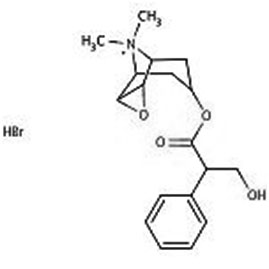
Life Threatening Anaphylaxis Secondary to Transdermal Scopolamine Patch in a Patient with Pre-existing Severe Ipratropium Allergy Bahram Namdari, MS IV Scopolamine is a belladonna alkaloid similar to atropine. It is a non-selective competitive blocker of muscarinic cholinergic receptors. Scopolamine is used to prevent nausea and motion sickness. The adverse effects of this medication include dry mouth, inhibition of sweating, tachycardia, blurred vision, hallucinations and delirium.(1) The current case report describes the first patient who developed life threatening anaphylaxis secondary to transdermal scopolamine with a pre-existing severe allergy to ipratropium. The patient is a 31-year-old female with a past medical history of polycystic ovarian syndrome who came into the hospital for laparoscopic removal of ovarian cysts. She had experienced immediate allergic reactions to nebulized ipratropium (Atrovent) which included hives, facial swelling and difficulty breathing. Transdermal scopolamine was placed 45 minutes prior to intubation. The patient was successfully intubated with etomidate, fentanyl and succinycholine. Within one hour, the patient developed bronchoconstriction, decreased tidal volumes, hives and flushing. She received multiple interventions including Bendaryl, Decadron, Solu-Cortef, and multiple epinephrine boluses but eventually developed cardiovascular collapse and was placed on ECMO. Within 24 hours, she developed left ventricular failure, diabetes insipidus, cerebral edema and cardiac arrest. Throughout her ECMO course, she was maintained on paralytic control without evidence of progression of the anaphylactic event and was eventually weaned from this course to a full recovery. Scopolamine is a-(hydroxymethyl) benzeneacetic acid 9-methyl-3-oxa-9-azatricyclo [3.3.1.02,4] non-7-yl ester. The empirical formula is C17H21NO4 with a molecular weight of 303.35 and a pKa of 7.55-7.81 (2). It is an alkaloid from Solanaceae (Daturametel and Scopolacarniolica) (3,4). It is a muscarinic antagonist structurally similar to the neurotransmitter acetylcholine.(5) It functions primarily by blocking the muscarinic acetylcholine receptors and is therefore anticholinergic. The most common use of scopolamine is to treat motion sickness.(1) It is not clear how Scopolamine prevents nausea and vomiting associated with motion sickness, but it is believed that it prevents the actions of acetylcholine in the vomiting center of the brain.(5) Scopolamine may be delivered via a transdermal route.(1) The TransdermScóp (transdermal scopolamine) system is a circular flat patch designed for continuous release of scopolamine following application to an area of intact skin behind the ear.(1) Blood levels of scopolamine via this system may be detected within two hours of application.(1)
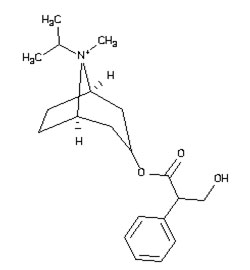
Ipratropium is a chemically similar molecule to scopolamine (Figure 1). Ipratropium (Atrovent, C20H30NO3:MW=332.4571) is an anticholinergic bronchodilator chemically described as 8-azoniabicyclo[3.2.1]octane,3-(3-hydroxy-1-oxo-2-phenylpropoxy)-8-methyl-8-(1-methylethyl)-,bromide monohydrate, (3-endo,8-syn)-:a synthetic quaternary ammonium compound, therefore chemically related to scopolamine.(6) Ipratropium bromide is an anticholinergic agent that functions by blocking muscarinic cholinergic receptors, causing a decrease in the formation of cyclic guanosine monophosphate and thereby decreasing intracellular calcium, ultimately resulting in decreased contractility of smooth muscle.(7) Ipratropium can also be used via nebulizer or meter dose inhaler to reduce bronchospams in chronic bronchitis, emphysema, and asthma.(7) Anaphylaxis to anticholinergics has been reported in the literature in the past.(8) However, anaphylactic reactions to transdermal scopolamine in a patient with severe allergies to ipratropium has not been reported. Given the patient’s previous history of anaphylaxis to an essentially identical chemical, the timing of the anaphylactic event in reference to the reported blood levels found after the application of the patch in studies, the improvement of the patient, despite the continuous use of drugs used in the induction, suggests that the patient experienced an anaphylactic reaction to transdermal scopolamine. In the future, any patient with a severe allergy to ipratropium should avoid the use of scopolamine in any form. References:
- BACK TO TOP -
|
||||||
Allergy Review Information The host subspecialty editor will invite selected authors to feature a topic related to the main theme of the eJACOP edition. These manuscripts will primarily be reviews on the selected topic, although studies either clinical or bench work may be featured in this forum. The purpose of this selection is to enhance the featured topic in the Allergy Review.
|
 TO SUBMIT YOUR ALLERGY REVIEW |