Determining the Gestational Age of a Newborn
Joelle Paulozzi
LECOM
To determine gestational age in a fetus, menstrual history and ultrasound methods are most typically used. In the newborn, gestational age testing is done by physical examination and neuromuscular assessment. These determinations are used to assess intrauterine growth, to make important decisions about delivery of an infant in complicated pregnancies, and to help predict the infant’s clinical course in the future. The increasing neonatal morbidity and mortality that is prevalent amongst premature and IUGR infants has spawned the various changes that have been made to the methods of assessing high risk infants. Once referred to as the Dubowitz Method has, in the past, been changed to the Ballard Method. Now, with the latest changes that have been made, the New Ballard Score has been developed.
These postnatal assessments have been developed to help assure that the predicted gestational age of the fetus matches that of the gestational age in the newborn, especially those newborns that are born prematurely or of IUGR. Any discrepancies that exist amongst these assessments of gestational age may indicate that the newborn is at a higher risk of morbidity or mortality (Behrman et al 720).
The Examination History
Dubowitz Method
The Dubowitz Method was used widely for years before the development of the New Ballard Score. It’s a scoring system based on 21 physical and neurologic assessments. Of the 21 criteria, ten are part of the neuromuscular exam and are scored on a scale from 0 to 5. Eleven criteria make up the physical exam and are scored on a scale from 0 to 4. The infant’s physical features allow for differentiation of gestational age whereupon the infant is greater than 34 weeks. The scores are then combined to help determine the gestational age.
There are, however, two disadvantages of the Dubowitz Method. The gestational age of premature infants is often overestimated. One study, including 110 preterm infants possessing a mean GA of 28.3 weeks which was calculated from the Last Menstrual Period, showed that when using the Dubowitz examination to assess the GA it was overestimated by 2.8 weeks (Sanders et al, 88). Another disadvantage to this method is the length of the examination required to assess the total amount of criteria. At times, the complete exam is difficult to perform on sick or extremely premature infants. Because of some of these drawbacks to the Dubowitz Method, the Ballard Method was developed to shorten the examination and improve upon the postnatal gestational age assessment.
Ballard Method
The Ballard Method is different from the Dubowitz in that the physical exam and the neuromuscular exam have each been shortened to meet six criteria (Ballard et al, 95). The scores of each exam are added together to determine the appropriate maturity rating, which is typically accurate within a two week range.
The advantage of the Ballard Method over the Dubowitz Method is based on time. The Ballard Method, with only six criteria to each examination, allows for a quicker examination. This is especially advantageous in sick infants or those whom are extremely premature (Ballard et al, 95).
This method, however, still has its weaknesses. Like the Dubowitz Method, it too may be inaccurate in assessing those infants small for gestational age or of prematurity.
New Ballard Score
The New Ballard Score is the latest method in determining gestational age. It was developed in an attempt to improve upon the previous disadvantages. It has modified the Ballard Method, expanding upon the physical and neurologic features, so that infants from weeks 20 and greater may be better assessed in determining the appropriate maturity rating (Ballard et al, 119).
What’s Assessed?
In the methods discussed, there are two common denominators: the physical criteria and the neuromuscular criteria. The New Ballard Score takes a look at six criteria of each and scores them on a scale from -1 to 5. The physical criteria are: the skin, lanugo, plantar surface, breast, eyes/ears, and the genitalia. The neuromuscular criteria are: the posture, square window, scarf sign, arm recoil, popliteal angle, and heel to ear.
The Physical Criteria

To View Figure 1: The Physical Criteria and Maturing Rating
(The New Ballard Score).
Skin
While the skin may start off with a sticky-like texture, friability, and translucency in prematurity, it eventually thickens, dries, becomes wrinkled and/or peels, and may even develop a rash in the maturation process (The New Ballard Score).
Lanugo
Lanugo, the fine, down-like hair that covers the body of the fetus, comes and goes during its development. Beginning to appear in the 24th-25th week, it reaches its abundance by the 28th week of gestation. Thinning, then, starts to occur over the lower back eventually leading to larger bald areas in the lumbo-sacral region. By term, the back is mostly devoid of lanugo (The New Ballard Score).
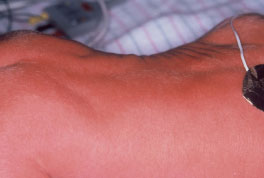
Figure 2: The absence of lanugo in the lumbo-sacral region (The New Ballard Score).
The Plantar Surface
The plantar surface is an evaluation of the major foot creases on the sole of the foot. The earliest crease begins to develop on the ball of the foot. Very immature infants have no detectable creases on examination (The New Ballard Score).
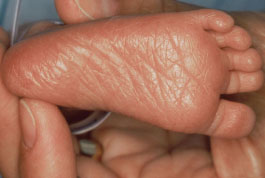
Figure 3: The plantar surface with several creases present (The New Ballard Score).
Breast
The breast tissue is assessed by the size of the areola and the presence or absence of stippling. Over- or under-nutrition of a fetus can have an effect on the breast size (The New Ballard Score).

Figure 4: Breast tissue with small areola and minimal stippling (The New Ballard Score).
Eye/Ear
As the maturation process occurs the pinna of the ear changes its configuration and the cartilage begins to thicken. The examiner tests for the elasticity of the ear and the thickness of the cartilage by palpating the ear and folding the pinna of the ear towards the infants face. The faster the recoil of the ear backwards, the higher the score given, which indicates a higher level of maturity as well.
The development of the fetal eyelid is assessed by the eyelid fusion status and the ease of which they are able to separate with light traction (The New Ballard Score).
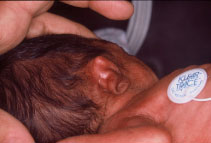
Figure 5: Absence of pinna recoil (The New Ballard Score).
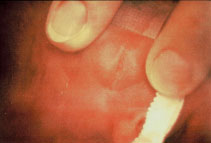
Figure 6: Fused eyelids (The New Ballard Score).
Genitals
The male genitalia assessment is based on the descent of the testes and the appearance of the scrotal sac. The testes do not begin their descent from the abdomen until the 30th week of gestation and can often be felt in the inguinal canal around the 33rd and 34th week. At the same time, the scrotum begins to thicken and develops more numerous, deeper rugae.
The female genitalia are assessed by the developing clitoris, labia minora, and majora. In early development, the clitoris and labia minora appear much larger and are more prominent until the labia majora develop to eventually overshadow them (The New Ballard Score).
The Neuromuscular Criteria
To View Figure 7: The Neuromuscular Criteria and Maturity Rating
(The New Ballard Score).
Posture
Posture is reflected in the infant’s total body muscle tone. Both the preferred position at rest and their resistance to stretching of individual muscle groups contribute to the infant’s posture from week to week. As the baby continues to grow, it develops increasing passive flexor tone that progresses from the lower to the upper extremities, affecting the infant’s preferred posture (The New Ballard Score).
Square Window
Square window is the terminology used to describe the flexibility of the wrist. The degree of wrist flexion and the resistance to extensor stretching determine the angle of the wrist and its true flexibility (The New Ballard Score).
Figure 8: Wrist flexion with 45-60 angle (The New Ballard Score).
Arm Recoil
Arm recoil is a measurement of the passive flexor tone of the biceps muscle. The recoil maneuver is manipulated by extending the upper extremities and watching for the amount of rebound flexion that occurs. The more mature the infant is a greater amount of recoil is to be expected (The New Ballard Score).
Popliteal Angle
This test assesses the passive flexor tone around the knee joint by testing the resistance to leg extension while the infant’s thigh is on the chest. As the infant matures the resistance to extension at the knee joint increases (The New Ballard Score).

Figure 9: Popliteal angle of 90 degrees (The New Ballard Score).
Scarf Sign
This exam tests the passive flexor tone around the shoulder girdle. While the infant is lying supine, the examiner extends the arm across the infant’s chest towards the other arm. The degree of passive extension across the chest decreases as the infant matures (The New Ballard Score).

Figure 10: Scarf sign is shown here with a maturity rating of 1 (The New Ballard Score).
Heel to Ear
This maneuver is done to assess the passive muscular tone of the pelvic girdle. While the infant is lying supine the one lower extremity is flexed at the hip to bring it alongside the infant’s trunk. The examiner holds the thigh in place with one hand while trying to bring the heel to the ipsilateral ear with the other hand. The position of the heel when resistance is felt is then measured. The level of maturity is determined by the landmark positioning of the heel when resistance is felt. As the infant matures, the examiner is unable to fully, passively bring heel to ear (The New Ballard Score).

Figure 11: Heel to ear maneuver is shown here with the heel landmarked between the nipple and umbilical lines (The New Ballard Score).
Total Maturity Rating
After the examinations are completed, the scores for all the physical and neurological criteria are added together. The final score is matched to the gestational age of the newborn in weeks, determining the total maturity rating of the infant.
TOTAL SCORE
(NEUROMUSCULAR + PHYSICAL) |
WEEKS |
-10 |
20 |
-5 |
22 |
0 |
24 |
5 |
26 |
10 |
28 |
15 |
30 |
20 |
32 |
25 |
34 |
30 |
36 |
35 |
38 |
40 |
40 |
45 |
42 |
50 |
44 |
Total Maturity Rating (The New Ballard Score).
The development of the New Ballard Score has helped to improve the determination of the gestational age in a newborn. By evaluating these neuromuscular and physical criteria, infants born from 20 weeks and older are able to be better assessed. However, there is always continued room for improvement in evaluating the newborn. There is something to be said about the variation that exists amongst these examination methods and the criteria that is being evaluated. Much of the examination and the scoring of the criteria are reliant upon the examiner. Variation may exist in each neurological exam performed upon each infant and in how the physical criteria are interpreted. Studies continue to be done in an attempt to review these methods to help make improvements where they’re needed.
References
Ballard, JL., et al. A simplified score for assessment of fetal maturation of newly born infants. 1979.
Behrman, Richard E., et al. Nelson Textbook of Pediatrics. Vol. 1. 18th Edition. Srinivas Puri, New Delhi: Elsevier.
Sanders, M., et al. Gestational age in preterm neonates weighing less than 1500 grams. 1991.
Ballard Score.com. The New Ballard Score. 1 November 2009 <http://ballardscore.com>
